AI remains one of the most polarizing topics in marketing. For every brand racing to integrate it into creative campaigns, there’s another pulling back - worried about authenticity, ethics, or simply losing the “human touch” that all great activations still depend on. But as we’ve recently seen, audiences are becoming less concerned about the use of AI in campaigns. It’s much more about how it’s used. Here are two great recent examples of different approaches - and two very different audience reactions.
Sharp Work by Dollar Shave Club
First the good. Dollar Shave Club swept onto the scene as a plucky start-up more than a decade ago, capturing attention with a fun and original YouTube commercial which quickly went viral, winning "Best Out-of-Nowhere Video Campaign" at the 2012 Ad Age Viral Video Awards. That spot didn’t just sell razors. It established a brand voice.
A lot has happened since then - not least the company being acquired by Unilever in 2026 for a staggering $1 billion. While DSC’s business has thrived since that viral ad, none of its subsequent ad campaigns have come close to recapturing that lightning-in-a-bottle moment of 2012.
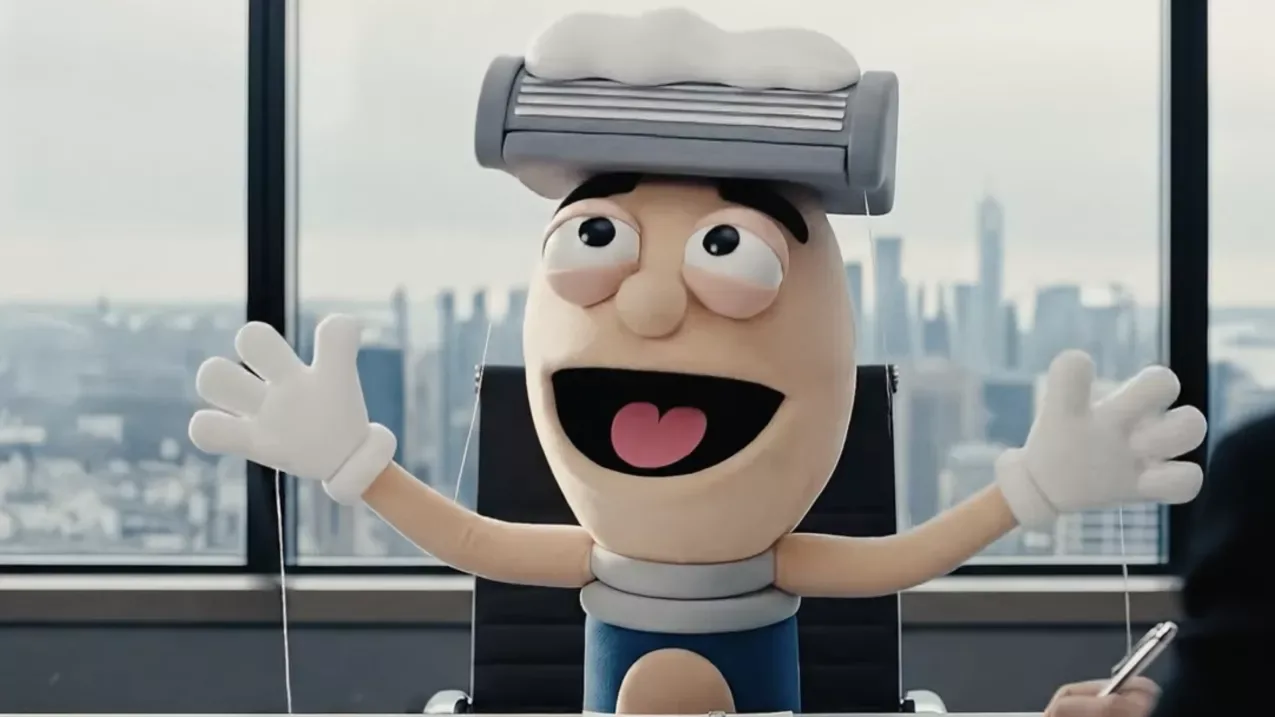
But just recently the ad industry was taking notice once again. Their latest spot “We Put Our Money Where It Matters,” leans into the absurdity of AI-enabled creativity: cloned executives, sharks in fish tanks, elevator DJs, goat milking. It’s over-the-top by design. And crucially, it doesn’t pretend to be anything else. Anyone paying attention knows it’s AI - and that transparency is the point.
At a time when many brands are cautious about AI in creative, Dollar Shave Club chose to disarm the conversation with humour. Instead of asking audiences to accept AI as the future, it invites them to laugh at it - while still benefiting from the speed, flexibility and cost efficiencies the technology enables.
That approach feels very on-brand. Dollar Shave Club has always thrived by poking fun at category conventions, from overpriced razors to hyper-serious grooming ads. AI is simply the latest sacred cow to tip over. And by partnering with an AI-first creative agency, the brand didn’t dilute its voice - it amplified it. While there are still some critics of the approach, it was a fun and very on-brand way to generate awareness.
Spirit of Christmas is lost on McDonald’s
On the flip-side, McDonald’s Netherlands had a rough ride when it launched its own AI-powered campaign. Titled “the most terrible time of the year” the AI-generated creative presents Christmas time as a horrendous experience, with the only escape being to hide out in McDonald’s until January arrives. It prompted a negative backlash, not just for the fact it was entirely AI-generated, but also the sentiment about Christmas being a miserable time of the year. In fact, the campaign was so unpopular, that McDonald’s pulled the commercial from YouTube altogether (although you can still find it).
Both the McDonald’s and Dollar Shave Club commercials were entirely AI generated. But they led to very different reactions because of the content and tone of those two spots.
It’s not the AI - it’s what you do with it that counts
The takeaway isn’t that every brand should rush to make AI-driven ads. It’s that resistance often fades when creativity leads. Dollar Shave Club didn’t use AI to replace human thinking. It used it to exaggerate, satirise and reinforce a brand voice that was already strong. It was playful with the fact that there’s still resistance to AI ads.
In a moment where AI may feel like an existential threat to creativity, Dollar Shave Club reminds us of something simple: tools don’t kill ideas. Boring or unpopular ideas do.
Are you ready to maximize your media strategy? Let’s talk.