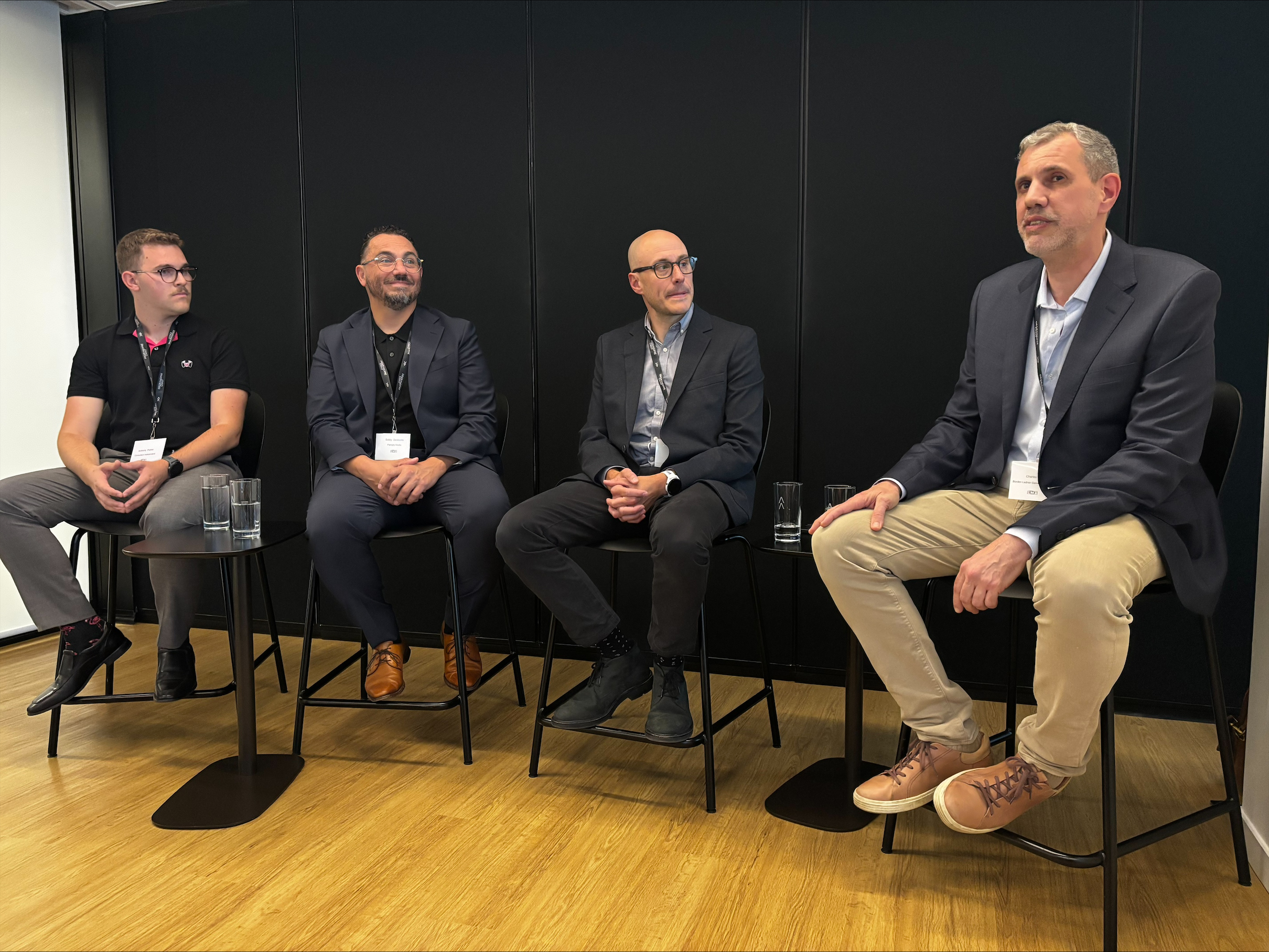
I recently joined a panel at the Legal Marketing Association in Montreal to discuss SEO, AI optimization and thought leadership. Naturally, the conversation was aimed at the legal industry, but the questions we discussed are relevant to virtually every marketer right now.
How is AI changing the way people find information? Is traditional SEO becoming less important? How do brands show up when people increasingly ask AI for answers rather than searching for them? And what role does thought leadership play in all of this?
My biggest takeaway is relatively simple: the rules of online visibility are changing, but that doesn’t make good marketing obsolete. In many ways, it makes the fundamentals even more important.
SEO isn’t dead - it's evolving.
For years, marketers have thought about online discovery largely through the lens of search engines.
Someone has a question. They type it into Google. Google provides a list of results. Brands compete to appear as high on that list as possible.
That behaviour isn’t disappearing overnight. But we’re now adding another layer.
People are increasingly asking questions of AI platforms and receiving synthesized answers instead of simply a page of links. Search engines themselves are incorporating AI-generated answers directly into their products.
For marketers, that means visibility is no longer just about whether your website ranks highly for a particular keyword. It’s increasingly about whether your organization is viewed as a credible and useful source of information on a subject.
That distinction matters.
Don’t optimize for the algorithm - build authority
Whenever a new platform or technology emerges, there’s an understandable temptation to look for the hack.
What do we need to do to get ChatGPT to mention us? How do we appear in Google’s AI-generated answers? What’s the new version of SEO?
Those are reasonable questions. But focusing too narrowly on them risks missing the bigger opportunity. AI optimization still starts with a strong content strategy.
Brands need to consistently produce useful, credible content around the subjects on which they want to be known. They need genuine expertise, clear perspectives and information that answers the questions their audiences are actually asking.
And they need to think beyond a single channel.
Your website matters. Search matters. LinkedIn matters. PR matters. Industry publications matter. Forums and communities matter. Events and real-world conversations matter.
Increasingly, these things shouldn’t be viewed as separate marketing activities. Together, they create the signals that establish what your organization knows, what it stands for and why somebody should pay attention to it.
Thought leadership is becoming more important, not less
This is where thought leadership becomes particularly interesting. AI can generate an enormous amount of competent, average content very quickly. What it can’t manufacture quite so easily is genuine expertise.
Your people have experiences, opinions and insights that are unique to your organization.
They know what customers are asking. They see changes happening within their industries. They have opinions about what’s working, what’s changing and what everyone else might be getting wrong.
That knowledge has value.
The mistake is assuming thought leadership belongs exclusively to the marketing department or the CEO.
Organizations should be thinking about multiple layers of authority: the corporate brand, the expertise associated with particular products or disciplines, and the individual voices of the people inside the business.
Those layers should reinforce one another.
If your smartest people are having great conversations with customers, speaking at conferences and sharing insights internally — but none of those ideas ever make their way into the digital world — you’re leaving a significant amount of potential visibility on the table.
Don’t forget the real world
There’s an interesting paradox here.
The more digital our lives become, the more valuable genuine human interaction can feel.
Events, conferences, conversations, relationships and experiences still matter. In fact, in an environment increasingly saturated with AI-generated content, I believe authentic human expertise and interaction may become even more valuable.
The future isn’t digital instead of physical. It’s both.
Today’s audiences move constantly between those two worlds. They might discover you through an AI-generated answer, read an article on your website, see one of your executives on LinkedIn and then meet your team at an industry event.
From their perspective, that’s one experience with your brand.
The competitive advantage will compound
One of the final questions we discussed at the LMA panel was whether organizations that invest in SEO, AI optimization and thought leadership now will build an advantage that becomes increasingly difficult for competitors to overcome.
I think they will. Authority compounds.
Every useful article, expert interview, media appearance, LinkedIn post, industry discussion and strong piece of original thinking adds another layer to an organization’s presence.
There probably isn’t a magic switch marketers can flip to guarantee their brand appears in every AI-generated answer.
But there is a much more sustainable strategy.
Be useful. Be credible. Have a point of view. Put your expertise into the world. And make sure you’re present wherever your audiences are looking for answers.
The technology surrounding marketing is changing remarkably quickly. The fundamental job of marketing hasn’t changed nearly as much.
AI Is Changing How Brands Get Found. Here’s What Marketers Need to Understand.

By Bobby Destounis