When you’re planning a media campaign for a travel brand, start with the journey your audience will actually make. For someone booking a flight, that includes the trip to the airport.
For example, two people can live the same distance from an airport and have very different journeys to get there. One might have a straightforward drive. The other might have to cross a congested bridge at rush hour. Both live inside the same radius on a map. When it’s time to book a flight, the trip to the airport can make them very different audiences.
That distinction mattered when Porter launched domestic flights from Montréal Metropolitan Airport (MET) this summer. For nearly 20 years, Quebecers had largely associated Porter with business travel between Montreal and Toronto. With new routes from Montreal’s South Shore, the airline wanted travellers to think of Porter for more Canadian destinations and book those flights online.
Panoply’s brief had two parts. We needed to make the launch widely known AND reach the people most likely to make MET their new point of departure.
Start with the trip to the airport
The original challenge focused on reaching those in a limited radius around MET. A radius is easy to map and translate into a media buy, but it measures distance in a straight line. Travellers have to think about the roads they’ll take, the time they’ll leave and how much extra time they’ll need if traffic is heavy.
So instead, our team looked closely at travel times and traffic patterns to ask a more practical question. Where could MET offer a faster, simpler or more predictable trip to the airport?
That analysis revealed a broader opportunity than the original perimeter suggested. It gave us a reason to consider communities farther from the terminal, where the journey to MET could still make it a practical choice. A shorter or more predictable trip to the airport gave those travellers a reason to look at a departure point they might previously have overlooked.
Turn the audience insight into a media plan
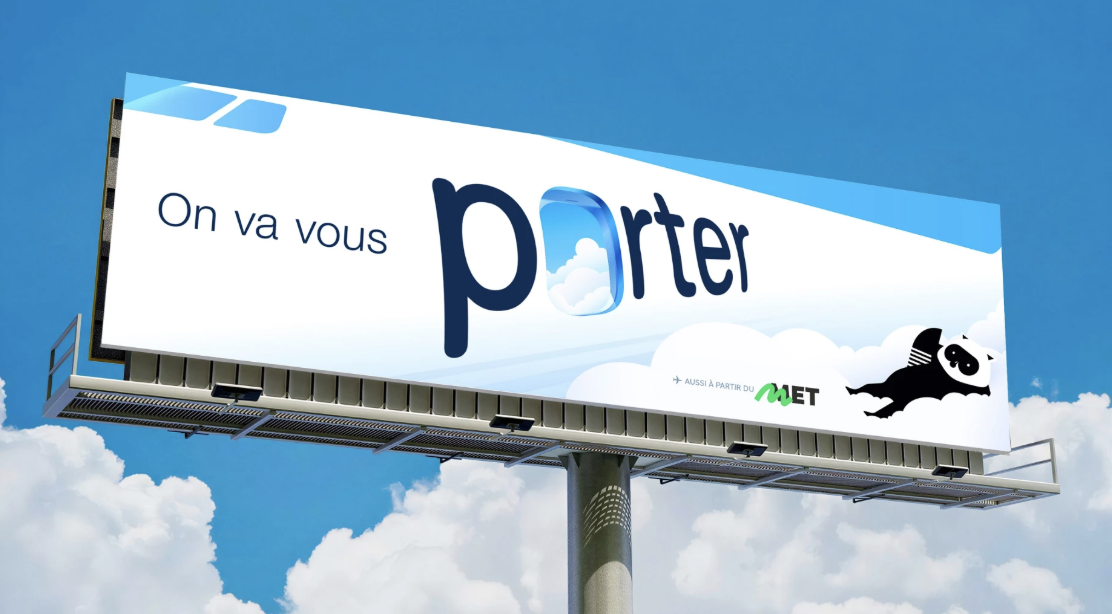
The travel-time analysis helped us decide which communities to prioritize within a broader awareness campaign. Across video, social and out-of-home, we built the campaign around a culturally relevant play on Porter’s name. The creative gave Quebecers a memorable introduction to the expansion, while the media plan gave particular attention to travellers who stood to benefit from it.
As we optimized the campaign, we extended its planned four-month run to eight months and came in under budget. The campaign increased ticket sales and strengthened brand recall, helping more Quebecers come to see Porter as an airline they could fly to a wider range of Canadian destinations.
Use the journey to draw the media map
The same thinking applies to a train station, an entertainment venue, or a tourism destination. Start with where people begin their journey, when they’re likely to travel and which other options they’re weighing. A convenient weekend train connection might put a community within reach even if it looks too far away on a map. A difficult transfer can have the opposite effect for a community that looks close.
The key takeaway is, before you set the boundaries for your next local campaign, map the journey your audience would actually make. You may find that some of the people with the clearest reason to act live outside the area you planned to buy.